
Ava Chen
AFTERCRASH IN THE GARDEN
I wrote this poem for a slam poetry performance themed “Crash”—hence the shattered vase. As a more narrative poem than my typical style, I wanted to explore how space is mediated, filled, and overfilled in a cracking relationship. I am drawn to self-fulfilling paradoxes: further injury in the attempts to heal, and how they manifest in love. The speaker in the poem is retrospective and nostalgic, yet paradoxically mired in the past. Overfeeding what could never be fed, inflicting pain for the sake of feeling, the sensuous lure and danger of excess—in the wake of the crash, what do we learn about wholeness? Were we ever here, or did we want too much to be?
It’s not like we had enough room, anyway, your words so full they spill
out of my mouth, greedy as an empty vase, wishing for violence
just to feel full. In the living room, the burgundy rug we forgot to throw out
absorbs the spilled water like a bloodstain, the glass shards like mirrors
too ashamed to be windows. When I look at you, I can’t tell if it’s your body
or its too-large reflection through the shattered glass. When I look
at myself, I know it’s a reflection, because all reflections are lies.
On the rug, strewn tulips lay like shards of plastic, unremarkable, so I tell myself:
this is not a tragic scene—just a replica of one. In other words,
I am not sure if I was ever alive, so you can’t call us dead, surely.
Still, I am not sure
who I am talking to anymore, what I am supposed to call mine—
the burgundy rug, these glass pieces that forget their shape the harder
I try to kick them together, your cross-armed stock-image stance as still
and buried as a good, good mine. Ticking. Waiting.
It’s been three years and still you haven’t fixed the leak in our bedroom ceiling,
citing the drought and money issues, but you didn’t have to try very hard—
it takes two to keep a dead thing moving. The next morning,
you’ll claim your side of the bed is wet because you cried after
you hurled the tulip vase at me. Cried all night long.
But it rained yesterday.
The first time in months. There’s wet trails not down your face
but blossoming darkly on the wallpaper, the same way
a paintbrush pressed too hard crushes every image into
the same oversaturated bloodstain, even the most beautiful,
especially the most beautiful. Everyone was going crazy about the end
of the drought—if only you’d looked outside, or up from your own body
so dry it must be cracking. I would know. I was there, sprawled in the dirt,
mouth as open as it was empty, letting the water fill my nose and ears and palms
and thinking: is this what it’s like, being watered as a plastic flower?
Really?
Three years ago, I’d made fun of the vase for its absurd shape
when you first got it for our garden’s extra tulips. I had spent
the afternoon pulling weeds to delay talking to you about moving in together—
which is why you probably bought the vase, too. What a pity, I remember thinking,
the earth rupturing between my fingers, roots grown long for survival
choking themselves into knots. They could be beautiful if only they stopped multiplying.
When I came back inside, tired from killing the unkillable, my first instinct
was to laugh at the florid, garish thing. What’s the point of the huge stomach
if the neck is so thin? How much space is wasted?
But what I didn’t understand
was that nothing here would ever become pregnant, just hollow,
as if swallowing more and more space could thin us into existence.
What I always believed, and so could never know, was that
you could teeter a vase on the edge of a bed and I’d spend three years
thinking: if I can keep it from falling to the bruised floor long enough, it’ll stay
when I let go, that physics will forgive us, as if physics had anything to do
with attraction or the tears running through our walls.
That the ensuing crash is just because I needed to hold you still
for one, or three, or twenty years more. You could ask me what we really
look like and I’d shatter every full wineglass against our mirror
until I realize how we all love the same, which is to say love the same
types of pain. And even then, I’d replant the tulips, over and over,
until the weeds swallow the soil itself.
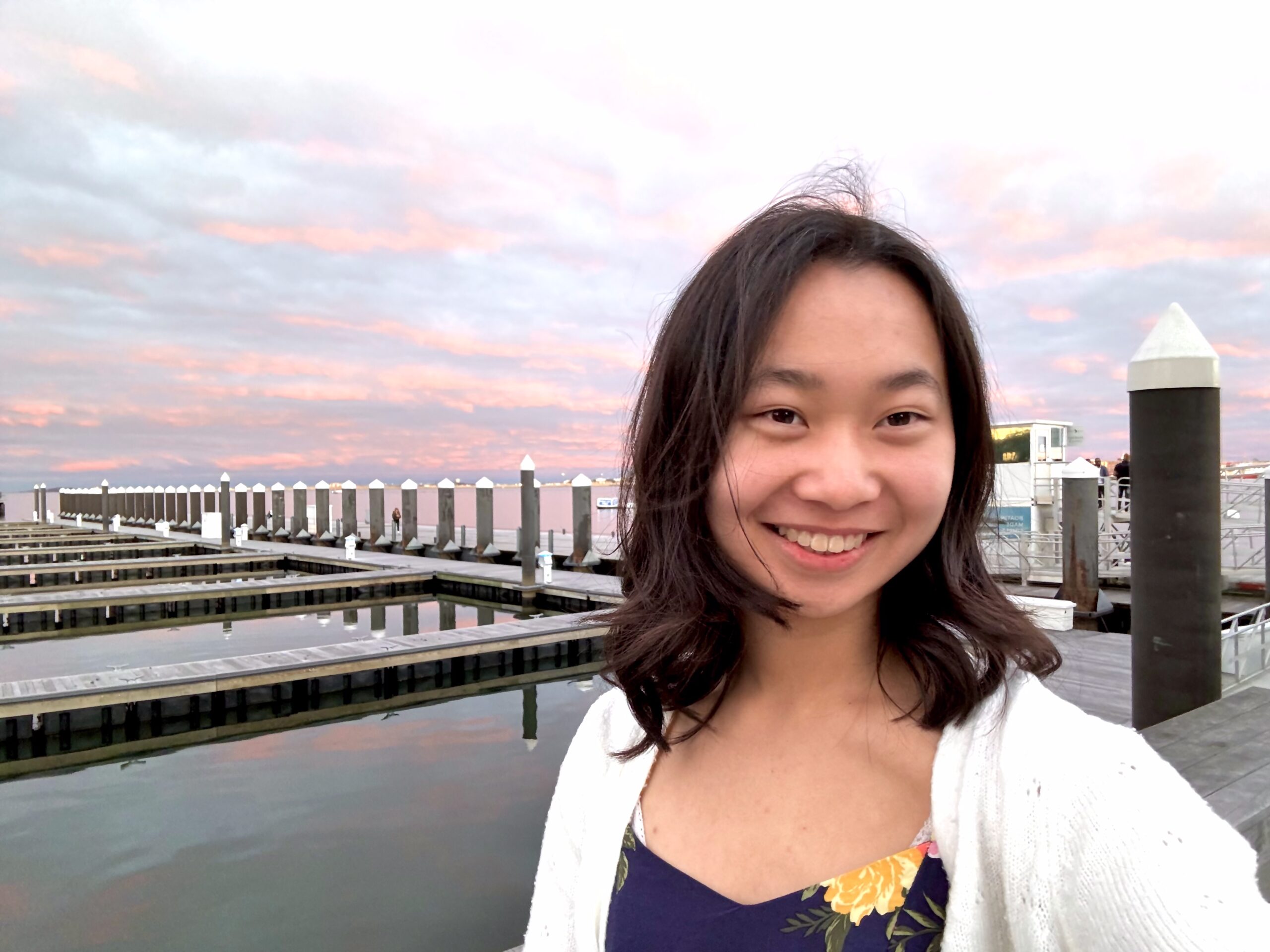
Ava Chen is a writer and editor from Massachusetts. Her work has appeared in or is forthcoming with The Rumpus, Salt Hill, Gigantic Sequins, and elsewhere. She hopes you have a wonderful day.
MORE FROM SPRING 2025 (6:4)