


Winners of our past contests or from our open submission periods, these are books of prose or poetry less than 50 pages in length, chosen by our readers and staff for publication. Click on any title below to learn more.
About | Submit | Donate | Contact Us
Our legal address lies within the past and present territories of the Haudenosaunee Confederacy.
We acknowledge the sovereignty of Haudenosaunee nations and their rights as first peoples of this region, as well as others throughout North America.
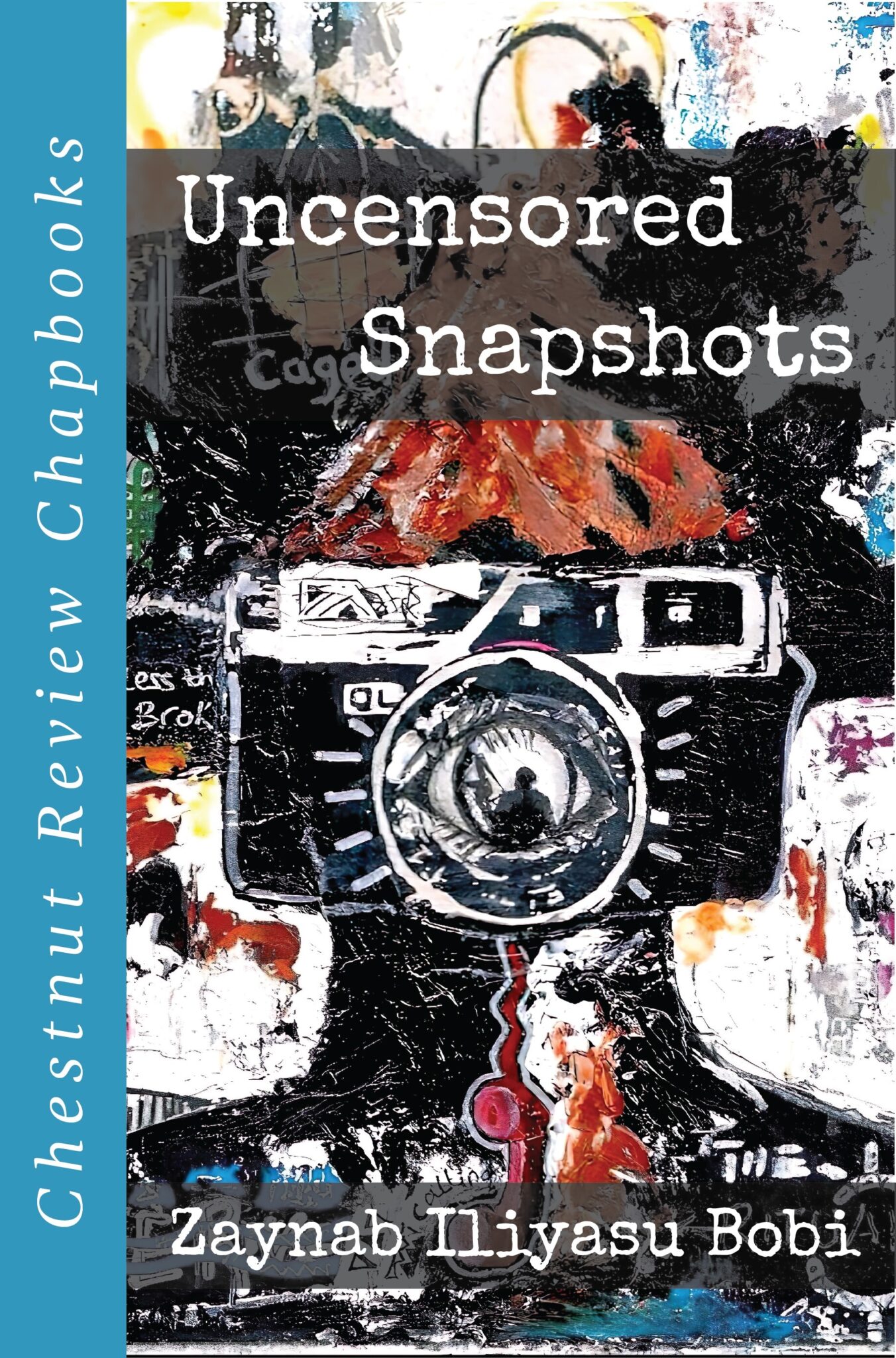
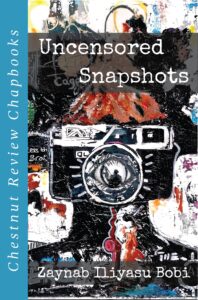
In Uncensored Snapshots, the speaker(s) harnesses the power of witness to document the decades-long ethnic cleansing that has left Northern Nigeria (Arewa) in fear of bloodshed and forced migration. In a world where media is often silenced by censorship, this collection offers a rare, unfiltered account of the rise of banditry in Arewa—an aftermath of the Boko Haram insurgency. Told through a deeply personal lens, the poems—both lyrical and cinematic—confront the terror of kidnapping, the trauma of loss, and the uncertainty of survival. As each piece lays bare the wounds of a broken system—where even retaliation becomes a life sentence—the people are left with a haunting question: Will Arewa and its people survive these atrocities?
Zaynab Ilyasu Bobi’s Uncensored Shapshots
The poems in this collection hold a mirror up to massacre. The strength of Uncensored Snapshots lies not only in its ability to capture the reader but to haunt them. As each page details a new horror, we are left wondering: how much taller can cruelty become? Where do you go when everywhere kills you? This chapbook is grief in capital letters, a message to a country that runs away and toward fire. And yet, Zaynab’s language is so brightly alive. Her attention to rhythm, image, and storytelling speaks to her poetic genius, creating an entry point into the speaker’s tilted sanity. You will walk away from this book transformed. Long after reading I still feel its echo: “to hear the screeching sound of my mother’s cry. i heard it & i hated it. ya Allah, i heard it & i hated it.”
— Nicole Adabunu, MFA Poetry Graduate, Iowa Writers’ Workshop ’23 and Cave Canem Fellow ’24
In Uncensored Snapshots, Nigerian-Hausa poet Zaynab Iliyasu Bobi explores identity, displacement, and resilience with unflinching precision. Drawing from her background in medical laboratory science and digital artistry, she creates a multifaceted lens through which to examine loss and transformation. Particularly through the lens of Boko Haram’s impact, Zaynab creates tangible manifestations of fragmentation that mirror exile and dislocation. Zaynab navigates different kinds of loss with profound sensitivity, charting both grief and the greater political dimensions of conflict. Uncensored Snapshots bears witness to the search for humanity in a world marked by erasure; through Zaynab’s fearless exploration of poetic form, personal fragments metamorphose into a collective cry to be heard.
— Cara Waterfall, award-winning poet & author, Radiant Wound (Unsolicited Press, May 2025)
In Uncensored Snapshots, we witness firsthand poignant reflections by audacious speakers on personal and societal struggles saddling many communities stuck in a nexus of tragic events. Zaynab’s brilliance shines through the myriad fashion with which these poems concurrently serve as a reminder of the similarity of our realities as a people and a plea for the rehumanization of our existence.
— Abu Bakr Sadiq, author of Leaked Footages
Order anywhere with ISBN: 978-1-965158-16-6
Buy on Bookshop.org
Available on Amazon.
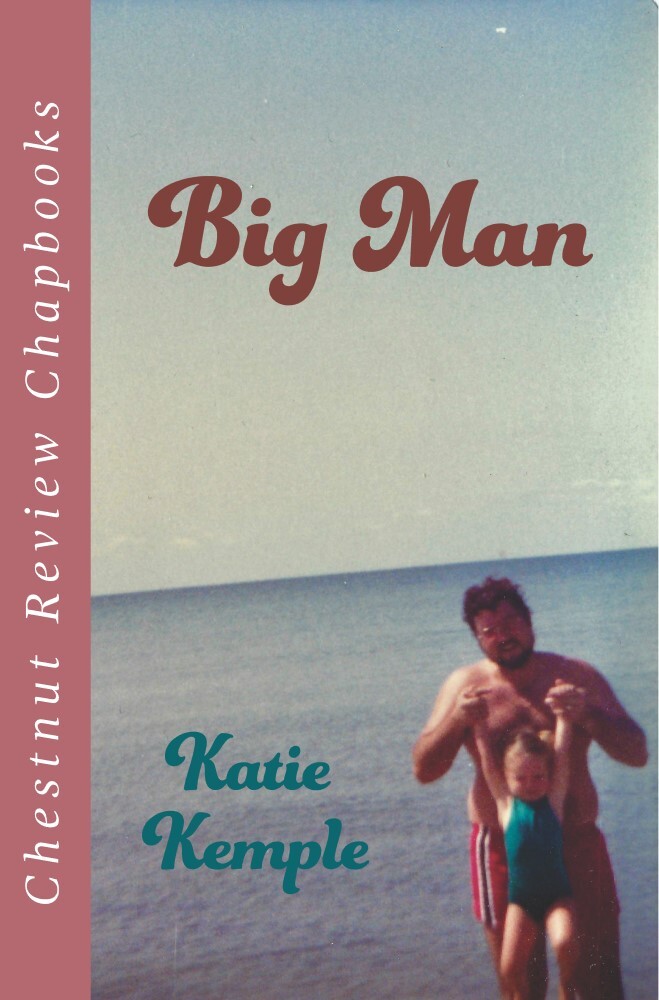
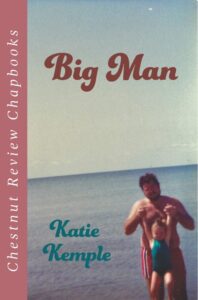
In Big Man Katie Kemple creates a portrait of fatherhood in the shadow of loss: the untimely death of partners, unresolved trauma as a veteran, and chronic pain. Kemple shows a father moving forward despite it all with the generosity and grace to love and be loved. He’s the teacher who gives hitchhiking students a lift to the mall, the dad who chaperones Girl Scout fieldtrips, the husband who clings to the last flame of his wife’s life. A man who stayed open to “rocks, sea glass, / shells and pinecones. Small things we / might have passed into his big hands.”
Katie Kemple, Big Man
Reading Big Man feels like sitting with an old friend on a comfy couch and exchanging stories about parents late into the night. These poems contain vulnerable vignettes: a child discovering a wedding photo of her dad with his first wife, a grown woman eating ice cream sandwiches from her father’s freezer after his death while remembering his stories of war, and many moments in between. “My dad, a bear of a guy, had a heart / of honey: sweet and stuck,” Kemple writes, and readers are so fortunate that she’s chosen to share him with us.
—Katie Manning, author of Hereverent and 28,065 Nights
Big Man guides us through an unflinching portrait of a father. But perhaps, more importantly, we witness a journey from father as mythic figure to father as human. Kemple’s masterful remembrance is a difficult one, as the people closest to us are the most difficult to catalogue because we are close observers of too much. But Kemple does just that—honors this remembrance and the many names and ways a person is remembered, recognizing all the “small things we might have passed into his big hands.”
—Su Cho, author of The Symmetry of Fish
These poems sing of the everyday world, the everydayness of life, love, and family, lifting us via the poet’s act of attention into an almost spiritual realm. In these pages, through the eyes of his daughter, you’ll fall enthralled with her father, with his “heart / of honey: sweet and stuck.” Along the journey you’ll fall back in love with your own life. If you have someone to hug, go hug them. If not, hug yourself.
—Christopher Citro, author of If We Had a Lemon We’d Throw It and Call That the Sun
Swift—& blunt w/grief: “We opened the earth’s / lid and buried him there.” Katie Kemple’s twenty-five poem ode to her dad, Big Man, is personal, specific, vivid—“like a forest of green recycling arrows”—& full of love, such love, love the lucky of us briefly know & mourn.
—Adam Golaski, author of Voice Notes
Order anywhere with ISBN: 978-1-965158-12-8
Buy on Bookshop.org
Available on Amazon.
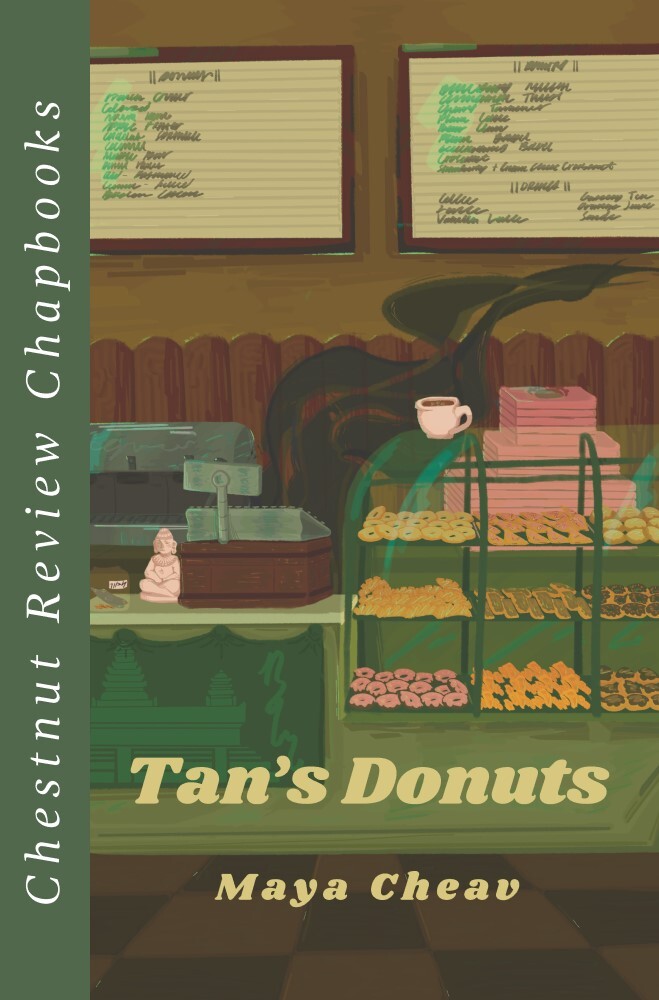
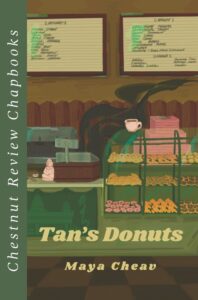
In Tan’s Donuts, a donut shop owner reflects on the orders of his most memorable customers. Maya Cheav tells the bittersweet story of a Cambodian war refugee and survivor of the Khmer Rouge adjusting to life in America while having to sacrifice his dreams to survive. This poetry chapbook reflects on complex Southeast Asian family dynamics, intergenerational trauma, and breaking the cycle before it’s too late.
Maya Cheav, Tan’s Donuts
Maya Cheav’s Tan’s Donuts is an intimate and visceral story of a Cambodian war refugee who opens up a donut shop. Each prose poem—from cherry turnovers, French crullers, strawberry and cream cheese croissants, everything—unravels the complexities of multiple generations and their familial dreams and traumas lingering within. Cheav’s lyrical storytelling truly shines throughout: “I cried an ocean and a half” and “You would think that losing one daughter would be enough to make a person kinder.” Each sentence is sticky with sweetness and ache, vulnerability and hopeful healing.
— Jane Wong
Skillfully intimate, written with deft prose, Maya Cheav’s second chapbook is a journey of journeys, from Cambodia to a donut shop in an American strip mall. Painful and sweet, at times blunt and bitter, this book is a map of recollection and multigenerational yearning, and most deliciously of all: truth, belonging, and love.
— Sarah Clark
Many Cambodian Genocide survivors opened donut shops to survive in America, but how many of their stories are explored through the lens of those shops? Maya Cheav’s imaginative chapbook might be the first to do that. Through a series of short vignettes written in sharp, straightforward prose, Cheav brings a family to life through the stories of a Cambodian donut shop owner. Tan’s Donuts is a deeply human story of love, longing, and survival.
— Monique Ouk
Order anywhere with ISBN: 978-1-965158-10-4
Buy on Bookshop.org
Available on Amazon.
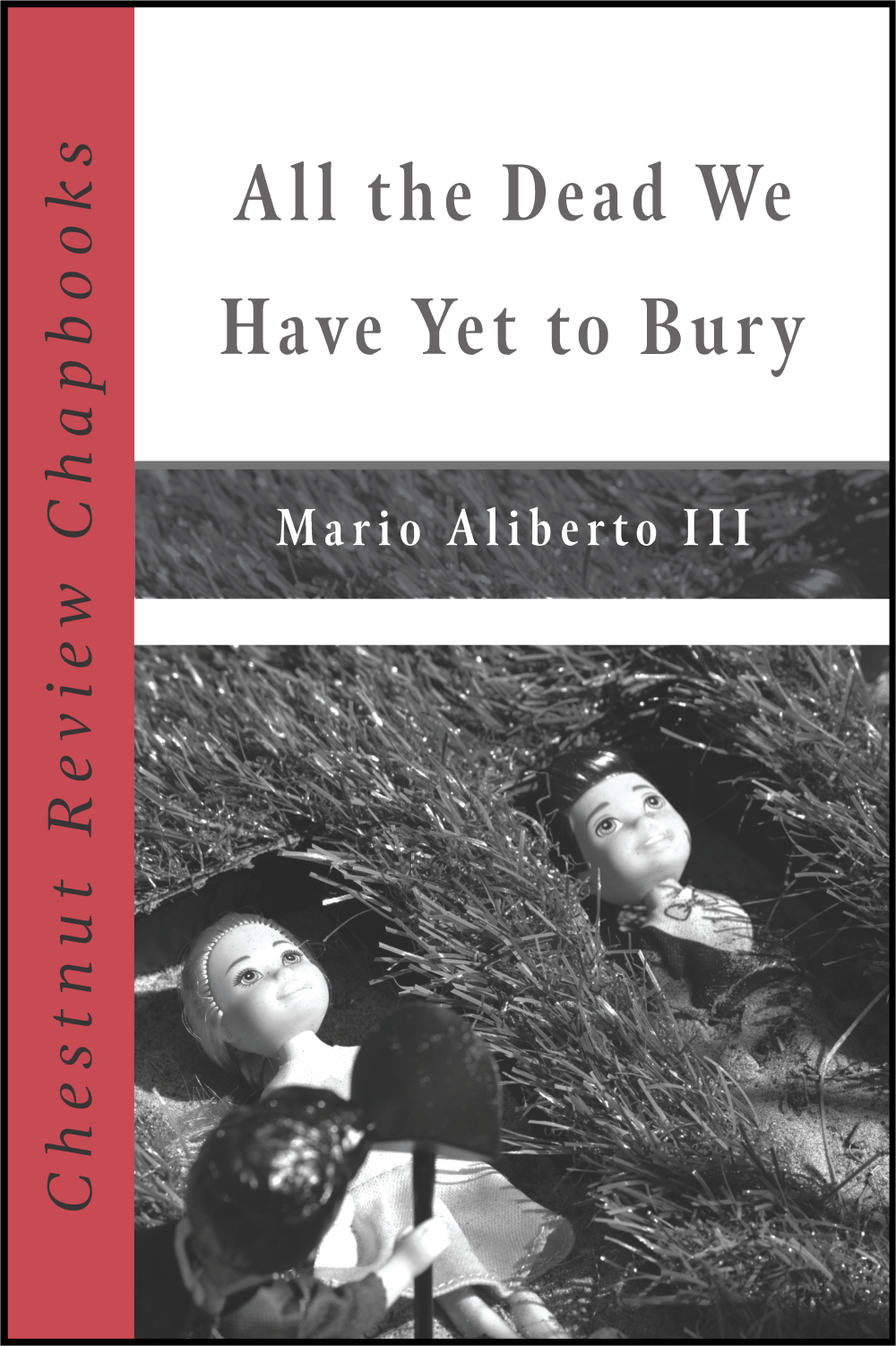
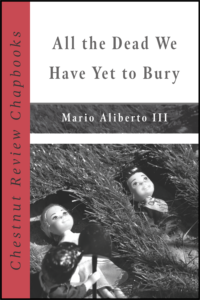
Tampa Bay, Florida. A lonely widow places an ad for a ghost to haunt her. A guilt-stricken teen looks for redemption as a lifeguard after failing to prevent his sister’s drowning. A disillusioned soldier battles a hurricane while reckoning with his family’s military inheritance.
In these explorations of grief and ghosts, Mario Aliberto III’s debut flash fiction collection is itself a visitation, inviting us to commune with those that haunt us, the living and the dead. Set amongst the sweltering heat and rich culture of Tampa Bay, these stories invite the reader to ask how much of yourself would you give up to hold on to those you love?
MARIO ALIBERTO III, All the Dead We Have Yet to Bury
The wonderful stories in Aliberto’s chapbook are haunting—literally. A
wife pays for someone to be the ghost of her dead husband, a drunk
man tries to follow the advice of his dead mother: again and again, the
past and the present collide to dramatic and beautiful effect. Packing
an emotional punch far beyond their length, these stories showcase the
power of flash fiction and linger in the memory like the stories’ many
ghosts.
—Gwen Kirby, author of Shit Cassandra Saw
Aliberto III writes sentences that flare like oxygen to fire, like the burst
of a firework imprinting upon the reader’s eye and mind. These stories
crackle and sizzle and keep the reader entertained with showing us the
best of ourselves. He can flat out tell a great story, one that entertains as
much as it teaches, our bodies, our hearts to keep “rising and rising and
never stopping.”
—Tommy Dean, author of Hollows
Aliberto offers a compelling catalogue of hauntings, and the writing
style is sharply attuned to each unique tale. These stories crackle with
energy, surprise, humor, and—most of all—a tenderness. I will be
reaching for this collection again and again….
—Cheryl Pappas, author of The Hunger of Clarity
Masterfully waving good-bye to the spirits of those we will lose and
those we have already lost, Aliberto takes us on an intimate journey
through the lives of these characters as they dance along the edges of
what’s left.
—Melissa Llanes Brownlee, author of Hard Skin and Bitter over Sweet
Order anywhere with ISBN: 978-1-965158-08-1
Buy on Bookshop.org
Available on Amazon.

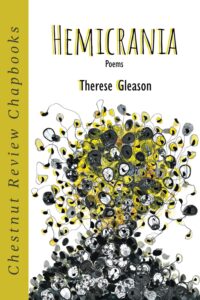
THERESE GLEASON, Hemicrania
In Hemicrania, poet Therese Gleason reaches out through the “half-headed pain” of the migraineur, despite (or rather, because of) “her head a cracked bell/ that wouldn’t stop ringing.” Like the two halves of the brain, this chapbook succeeds by dualities. Both thematically cohesive and formally expansive, Hemicrania tells the story, on one side, of the mostly male failures of medicine, and on the other, of the matrilineal inheritance of suffering “which women must endure.” Borrowing language from medicine but wholly rooted in poetry, the Patient is both reduced to the base elements of piss, salt, bile, and snot and elevated to the mystic, ghostly realm of saints, incantation, and prayer. Gleason asks “what angel, message, lesson” can be found in suffering. But even if, in the end, the Patient resigns, “I’m no more chosen than I am god/forsaken,” the poet has made from her suffering this simultaneously delicate and explosive contribution to the literature of women’s chronic pain.
—Cynthia Marie Hoffman, author of Exploding Head
Chronic and episodic migraine patients will agree that they’ll do anything and everything to exorcise the migraine demon. Author Therese Gleason attempts just that in Hemicrania via revelatory poems brimming with prayers, incantations, and supplications. The poet gives readers the 4-1-1 from the front lines of Migrainesville in poems that confront medical sexism and medical gaslighting—and in poems that explore the conundrum of genetic inheritance. The vulnerability and daily struggle of the person with migraine are depicted with vivid accuracy and candor. Hemicrania should reside on the nightstands of poetry lovers, patients, physicians, and caregivers.
—Rita Maria Martinez, author of The Jane and Bertha in Me
To read Hemicrania is to witness a poet contend with profound spiritual and physical agony. In found poems, hybrid forms, and collages, Gleason traces her family’s matrilineal inheritance of migraine alongside an enraging genealogy of the medical establishment’s all-too-frequent disregard for migraineurs’ suffering. And while Hemicrania is a scorching account of migraine’s brutal toll on body and mind, in its pages Gleason offers too a psalter of companionship: invocations, incantations, and charms against pain drawn from a thousand years of belief and experience. The unflinching intimacy of these poems humbled me.
—Carolyn Oliver, author of Inside the Storm I Want to Touch the Tremble
In Hemicrania, a gut-wrenching and aesthetically innovative portrait of the matrilineal curse of migraine, Therese Gleason renders the ineffable. Equal parts masterclass in vivifying the medical archive and gripping reportage from the patient’s vantage, Gleason’s intimate poems shatter migraineurs’ isolation to deliver spells for a painless future.
—Sarah M. Sala, author of Devil’s Lake
Order anywhere with ISBN: 978-1-965158-07-4
Buy on Bookshop.org
Available on Amazon.

JAVERIA HASNAIN, SIN
Every one of Hasnain’s poems is a revelation. There is an immediacy in this collection; the language dynamic yet deeply rooted in landscapes which map the sacred necessities of desire. With each poem, Hasnain peels back the self in different registers. The lyric becomes a medium for the poet’s longing–for homeland, the Beloved, for the poem itself. As she writes in “Water is a Sin,” Hasnain’s work explores “the privilege of being a woman,/ of housing a body desirable to touch.” I am moved by each poem’s quiet refusal to be still. The lines move as the poet’s mind does–breathless and inexplicable. Hasnain is a wonder, and this is a beautiful, prismatic debut.
—J. Mae Barizo, author of tender machines
Tendered in the narratives planted throughout this book is the iconography of the body and its desires. We are not spared the disdain, the erotic, the grief, and the strains placed on language.
—Adedayo Agarau, Stegner Fellow, author of The Arrival of Rain
Javeria Hasnain’s SIN is a chapbook fluent in the privilege of pleasure and mortality. Quick-footed and capacious, this chapbook circles questions of morbidity, morality and mortality like a shark. Decadently tongue-in-cheek, luxuriously voracious and covetously intelligent, these poems stand up and join the ranks of other dark surrealists’ like Alejandra Pizarnik, Sylvia Plath and Remedios Varo. Embalmed in a shadowy Islamic ennui, Hasnain has created an exegesis of sex and faith so empowering, angels might cower before it. Here we find sex as a speculative sport, “mercy [as] a howl” and sin as a fact of size. A genius in comparison with a stunning ability to move between cosmic and ordinary language, Hasnain has revealed herself to be a poet unafraid of any hungry horror, vibrant vitrol, or Dionysian damnation. Coyotes, countries and carnal desire alike flit across these pages like bats, imbued with an ancient apathy, poised to grow and loom over us in their gargantuan glory. Impeccable audacity and timeless daring. I’m in awe.
—Sanna Wani, author of My Grief, The Sun

ABDULJALAL MUSA ALIYU, DOLOUR
Abduljalal lays bare an enthralling poetic voice, one that invites readers to not just listen to its gripping narratives about the myriad facets of atrocities faced by humanity, but to bear witness to the testimonies of their consequences. In assertive strides, he navigates the intricate framework of family dynamics, displacement, personal and geographical violence, loss and estrangement from the self, love, lineage, benevolence and even, existence. Encyclopedia of Dolour is a lighthouse ushering us all to the feet of a poet whose voice will echo through many generations to come.
—Abu Bakr Sadiq, author of Leaked Footages
In Encyclopedia of Dolour, Aliyu pulls out profound emotions and personal experiences that express deeply the human condition. Through a chain of verses, the chapbook explores love, loss, family, and the underbelly of faith. His words testify to the function of poetry to capture the gloom of life, drawing readers into a brave world where difficult and sensitive motifs are painted, with each poem a vessel for shared empathy and understanding. The collection holds the poet’s quest for death to his agony, as he navigates the chaos of his mind, moving inside the circle of it all.
—Samuel A. Adeyemi, author of Rose Ash
Chapbooks are supposed to be interim selections to present new or uncollected work, but Abduljalal’s chapbook has the real feel and thrill of a full collection by an established poet. I am quite sure a full collection (which, given his talent, is just a matter of time) would prove that unmistakable promise and underline the fact that Abduljalal is destined to go to those fabled places where great poets go.
—Ismail Bala, author of Line of Sight
With a voice that is both urgent and laser-sharp, this poet is calling on us to take a step back, wear our goggles of compassion and take a cursory glance at the disintegrating ethos that are fast eroding the earth upon which we stand as a society. Impressively, he speaks with the power of a hurricane that will force open the all hidden crevices of our closed conscience. This poet roars, yet he is tender, compassionate and reassuring.
—Umar Abubakar Sidi, author of The Poet of Dust and Like Butterflies Scattered About by Art Rascals

ERIN LITTLE, PERSONAL INJURY
2023 POETRY CHAPBOOK WINNER
“I am thinking about longing, the oldest poetic concept, and the ways in which Erin Little brings longing to an unmatched understanding, one that is crucial, painful, and innermost in her debut chapbook, Personal Injury. Little is a writer I would follow anywhere. Her interrogations of longing take us through multiple and immediate dimensions: longing through the body as a cancer patient in a hospital; longing through her parents praying for a complete cure; longing as a youth in pain needing to be heard; and longing as an adult feeling love in rain and the rain in love. She implores the reader to be thoughtful with their words—this move hits the highest poetic marks. Little questions the definition of love, and she makes me stop—I turn the corner and this meditation will forever unwind in me.”
—Dorothy Chan, author of Babe and Return of the Chinese Femme
“Understanding since childhood that death can come from within, the speaker of these poems is acutely conscious of the various and particular ways her body remains present in the world, as a lover, daughter, observer, friend. Erin Little sets these experiences down with assuredness, even when they hurt. These poems record something akin to what Rilke once described as ‘the chill, uncertain sunlight of those long / childhood hours when you were so afraid,’ but they also make room for a ‘face lit like a bulb / ecstatic as a baby who’s found some / thing that moves her.’ There’s cracks of light in the gloom, there’s blood within a life. Personal Injury makes space for all of it, in gorgeous language and wonderfully sharp images. It’s a joy to read this work.”
—Heather Christle, author of The Crying Book and Heliopause
“Erin Little’s Personal Injury plays with physical harm and emotional hurt as it plays with poetic structures—from the sonnet and the villanelle to the list and the chart. Each poem tangles with its own existence and makes its reader question what existence is for, if not for relishing our entanglements.”
—Mark Yakich, author of Spiritual Exercises and The Importance Of Peeling Potatoes In Ukraine

DACIA PRICE, THIS IS FOR THE NAMING
2022 PROSE CHAPBOOK WINNER
In devoting such generous, yet often-piercing lyric attention to these fractured and brilliant narratives of family and body, Dacia Price’s essays become acts of “re-naming” the so-called stories of our lives. In Price’s world, love, loss, and the heritability thereof are allowed to collide with mice exiled to barren bins of dog food, the inadequacy of psychological manuals, prophetic sparrows and fugitive blueberries. The resulting resonances are unexpected, disarming, and electrically alive.
—Matthew Gavin Frank, author of Flight of the Diamond Smugglers
This is a story about choosing and not-choosing, about white capped singing sparrows and malignant tumors, about the ways we are tethered to the ones we love and to our bodies, and how we split apart. “…[I]n an act of defiance,” writes Dacia Price in This is for the Naming, “I choose neither.” Price spins a gorgeously lyrical web from science, family, and loss, in defiance of the laws of nature, longing for a different ending than the one we all know is inevitable, and driven by that singular human desire: to be seen, to be loved. This is a voice that will buoy you in the darkness.
—Rachel May, author of An American Quilt: Unfolding a Story of Family and Slavery

SEIF-ELDEINE, VOICES FROM A FORGOTTEN LETTER
2022 POETRY CHAPBOOK WINNER
A war correspondent of the imagination, Seif-Eldeine documents the Syrian conflict in a relentless present-tense and austere syntax reminiscent of Hemingway or Komunyakaa. These unforgettable voices speak to us from the kitchens, bars, and curbside jump rope games every bit as embattled as the front lines. What they never do is lecture or hector: “No blackboard, no chalk” begins “The Teacher at the Refugee Camp.” Nor do they censor the manic hilarity that combat can unleash—“the sound of a gun wasn’t it fun fun fun.” Eyes open to the “malevolent stars” presiding over Syria since 2011, Seif-Eldeine has written a war-torn, necessary book.
—Steven Cramer
Poets write “war poems” for a host of reasons: to witness, to memorialize and commemorate, to celebrate, to lament, to protest, to confront, to make sense, to make war’s abstraction concrete, to document war’s extraordinary realities so they may not otherwise be forgotten. Seif-Eldeine attends to these all with grace, attentiveness, openness of heart, and skill. The result: poems that give back dignity recklessly taken; poems that insist on a new vision of reality, be it of the past, the present, or perhaps most crucially of all, the future.
—Hayan Charara

ESPERANZA CINTRÓN, BOULDERS
2022 POETRY CHAPBOOK FINALIST
Crab grass and dandelions. Verdant rainforests in shattered shops. Raw music of urban life and relentless birdsong. Belle Isle, Eastern Market, Midtown, Cobo and the history of humanity, of capitalism. Absence, presence. The red-eyed nocturnal animal that will not flee your car. Grind and bump of steel, rust, wrecking balls, and yet the turquoise river, its day diamonds. Ah, such song, sensuality, breathless lists and litanies. From the chilling reality of the first poem to the crushing quote from Keynes at the end, this is a body-and-soul rocking, rapping, jiving celebration of the spirit of Detroit. Though there is grief for a lost era, and the natural world has predators whose “absolute power hungers for you,” Nature in its stark beauty triumphs everywhere. Cintrón’s electric poems will send currents through you. This collection contains a powerful energy, and like Nature itself, becomes vibrant and alive in the hands of this masterful poet.
—Zilka Joseph, author of In Our Beautiful Bones, Sparrows and Dust, Sharp Blue Search of Flame
Esperanza Cintrón’s Boulders is a celebratory lyric examining the rich beauty of Detroit. The city’s cold, its spring, its island and its birds all make appearances in this collection where the city’s natural landscape is a lively character overtaking abandoned buildings and threatening to cross the threshold of houses. Cintrón’s lush images and stunning sounds cascade throughout the book building an unforgettable love song dedicated to the history and the present of post-industrial Detroit.—Nandi Comer, author of Tapping OutLike the ‘boulders’ these poems are named for, Cintrón’s collection traces the particular urban geology and geography that predated, formed, and eventually crumbled—And in between the sidewalk cracks and sunken railways, empty plumbing stores and abandoned factories, life is teeming: a cardinal, a possum; quackgrass and honeysuckle; butterflies and bumblebees and all manner of inner-city flora and fauna (not least of all, people). From the salt mines to the Eastern Market, the stadium to the Q-Line, Cintrón’s Boulders is a suite of odes, blues, elegies, and incantations of place that “sparkle like silver talismans tossed across the strait.”
—Brandi Katherine Herrera, author of Mother is a Body
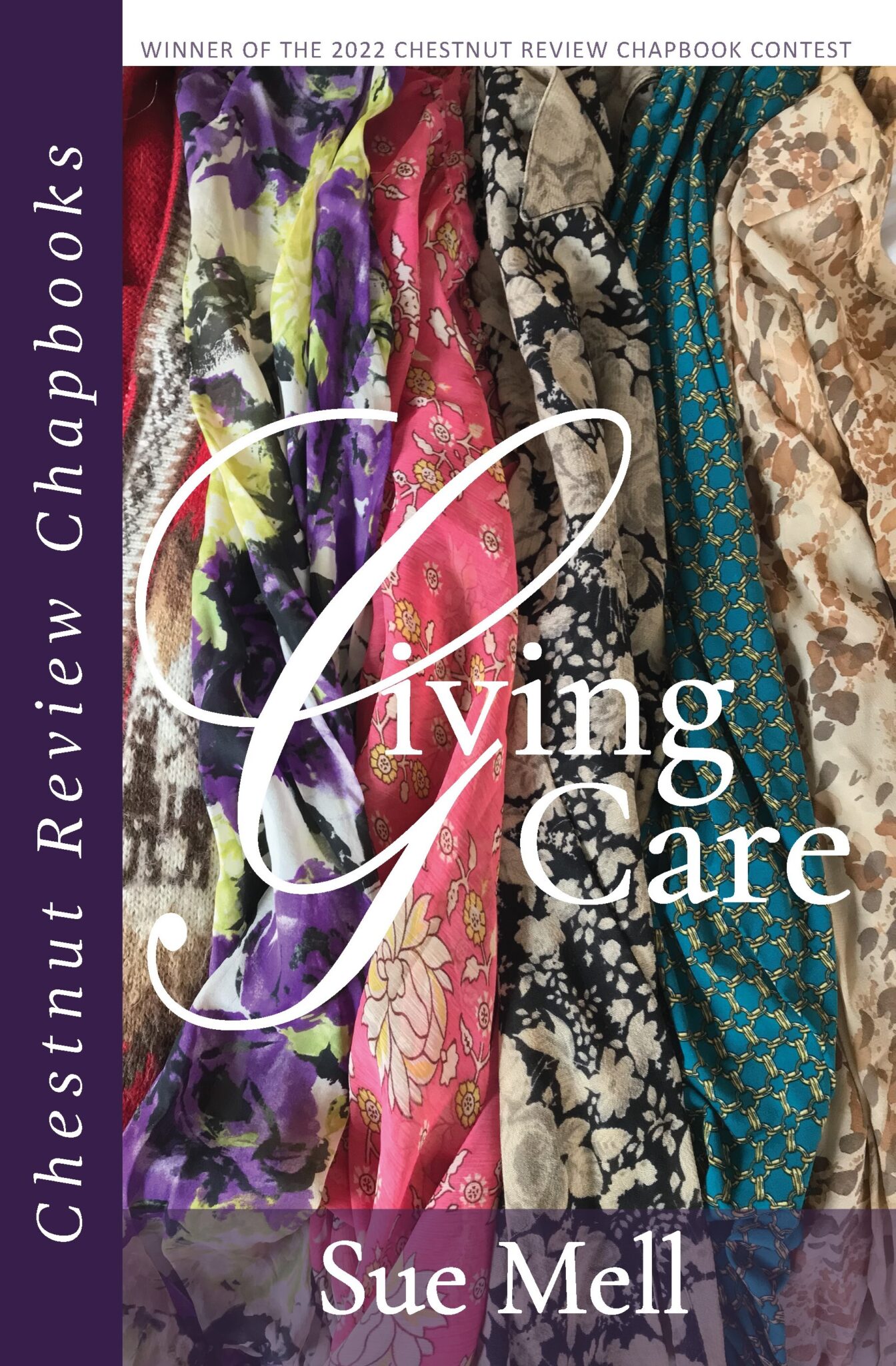
SUE MELL, GIVING CARE
WINNER OF THE 2021 PROSE CHAPBOOK CONTEST
In Giving Care, Sue Mell delivers short, sharp and powerfully rendered essays on caregiving a parent in decline. Mell navigates the shifting mother-daughter boundaries along a complicated past, the relentless present with its crises and consequences, and on toward the inevitable future never far from view. Written with lyrical control, humor and truth at the core, Mell’s essays reveal a kind of grief that infiltrates further with each terrible task, while revealing each terrible task as a profound act of love.
—Stephanie Gangi, acclaimed novelist of The Next and Carry the Dog
Giving Care is a brief yet resonant collection that captures the quiet intimacy of caregiving in a series of vivid snapshots. Powerful, truthful, and never sentimental, it’s a tour through the world of a child turned adult and an adult returning to childhood.
—Kathryn Kulpa, author of Girls on Film
For everyone worried about easing their mother’s decline, or about how their kids will handle their own decline, or what they’ll do without kids when the time comes, Sue Mell’s Giving Care is a box of bittersweet chocolates. One brief moment after another captured in urgent flashes, beautifully expressing what it’s like to keep going through moments dark and light in parental tending, hoping each day for our favorite flavor, that this one will be a good one.
—Allison K Willams, author of Seven Drafts

SARA SIDDIQUI CHANSARKAR, SKIN OVER MILK
2021 PROSE CHAPBOOK CONTEST RUNNER-UP
Skin Over Milk tells the story of young Chutki and her two sisters who bear the weight of being unwanted daughters in 1990’s India. Told through Chutki’s eyes, we feel the innocence that is childhood, allowing the gratitude for a crust of bread thrown away by her brothers, or the simple joy in making prank phone calls. We meet characters, such as the father who curses their mother for giving him useless girls, the brothers who don’t seem to appreciate the luxury of education. But we also meet the loving grandfather, Dada, who will die and watch over them like a star in the sky and their beautiful, beautiful mother, Ammi, who does what she can to make all of their lives bearable. Exquisitely written with a jeweler’s eye for detail, the deftest of hands with characterization and storytelling, this is a brilliant and unforgettable read.
― Francine Witte, author of Dressed All Wrong for This and The Way of the Wind
“The summer of 1990 brought rain and more rain to our little town of Muzaffarnagar.” Thus begins Sara Siddiqui Chansarkar’s chapbook, Skin Over Milk, an elegantly written and immersive family story told over the course of twelve short chapters and through the collective point of view of the family’s siblings. We readers get a strong sense of this particular family’s joys and heartaches, struggles and traditions. Chansarkar knows how to weave her stories seamlessly and disarmingly, with heart and humor and tenderness. It is a testament to this writer’s mastery that I never wanted the story to end.
― Kathy Fish, author of Wild Life: Collected Works
With precision and insight, these evocative stories within a story speak of rain and tears, of sisterhood and solidarity, of poverty, and growing up as girls under the lashes of patriarchy. Chansarkar evokes the poetry and brutality of small-town India with a deftness that makes it impossible to tell which is which.
― Damyanti Biswas, author of You Beneath Your Skin and The Blue Bar
In lush and incisive prose, Sara Siddiqui Chansarkar tells the story of three sisters growing up in a home and a culture that treats them as valueless, who nonetheless scheme and dream to claim space: “I sat squished between my sisters, dreaming of a seat of my own someday.” Like the secret a mother whispers in the ear of her crying baby girl to protect her from her husband’s rage, Skin Over Milk is confiding, talismanic. By turns painful and joyful, this novella transfixed me.
― Kim Magowan, author of Undoing, The Light Source, and How Far I’ve Come

ANDREW KRIVAK, GHOSTS OF THE MONADNOCK WOLVES
WINNER OF THE 2021 POETRY CHAPBOOK CONTEST
Here in these powerful new poems that make up Ghosts of the Monadnock Wolves, Andrew Krivak presents those haunting, scintillant images he gave us earlier in The Signal Flame and The Bear: A wilderness drumming in the shadows of the Monadnock range, with its unforgiving ice, its Dantesque slopes, and the howl of those ghost wolves and coyotes. In the end, it’s a father’s hope to somehow protect one’s children against those nightmarish forces we know are beyond our control.
—Paul Mariani, author of Crossing Cocytus and The Great Wheel
Andrew Krivak’s collection, Ghosts of the Monadnock Wolves, celebrates the history of a place in the only way that matters – by giving us the people of the place. In “Lake Ice,” there’s a passage that suggests his method of poetic exploration: The narrator and his children stand on a frozen lake and watch the “auger as it turns and searches, turns and searches through each frozen layer, until water so green and cold it looks oily gushes up and settles into slush around our boots.” Krivak’s close eye for the sensory detail grounds all of these poems, and the work reminds me of Harry Humes and the early poems of James Dickey. Reader, get ready to be immersed, get ready to learn what the auger can find.
—Charles Rafferty, author of A Cluster of Noisy Planets

The first half of Erik Wilbur’s debut chapbook illustrates a young man’s struggle to maintain his relationship with a father who’s battling addiction; the second half illustrates a young man’s struggle to process the grief of losing his father to that addiction. At points, this beautiful, imagistic meditation on acceptance reads like a survival guide for adult children of alcoholics. At points, it’s a testament to poetry’s capacity to conjure comfort and forgiveness during life’s most anxiety-and-resentment-laden moments.